Physics - Motion 18 (Projectile Motion Practice)
OPENING QUESTION:
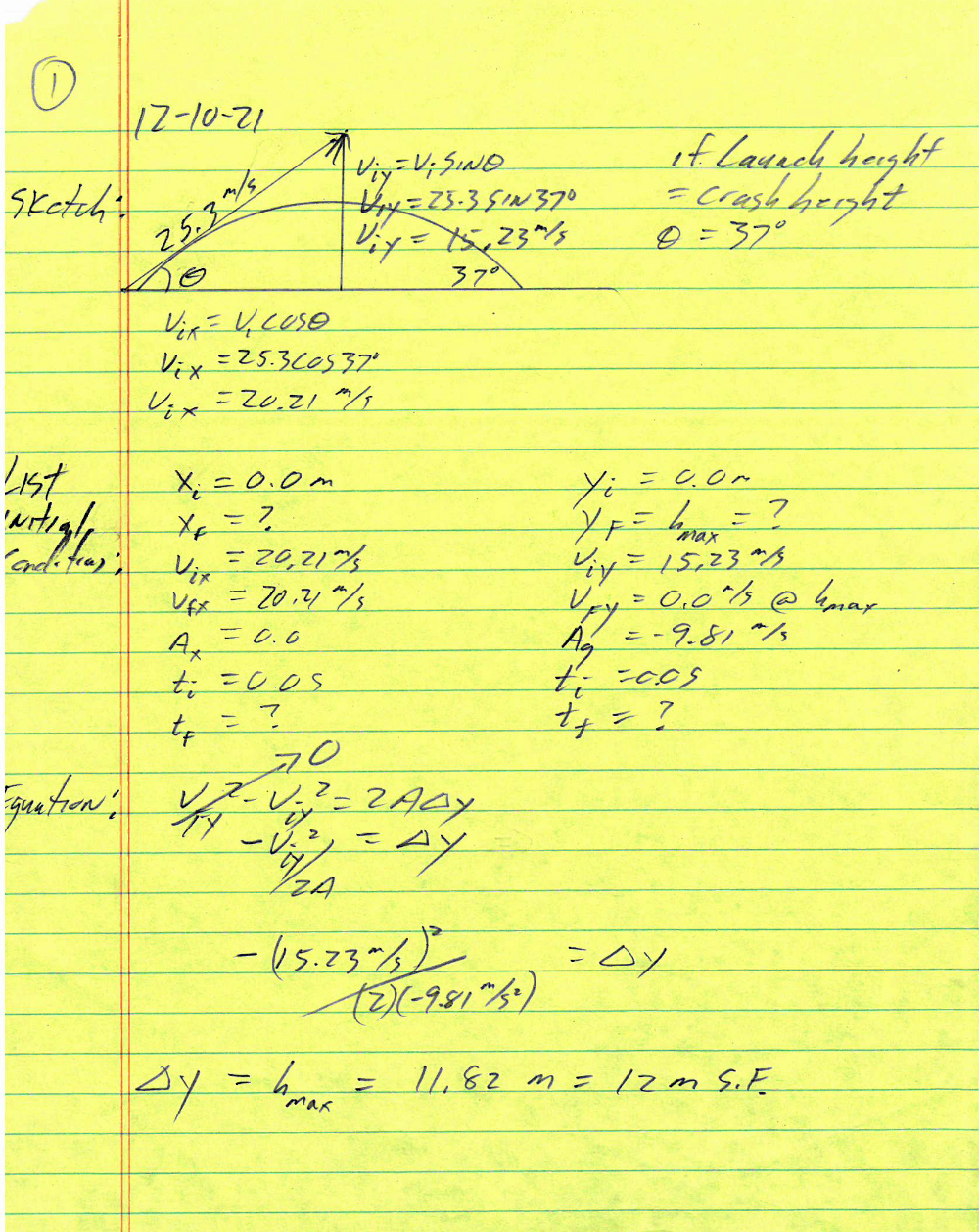
You launch an object into projectile motion with an initial velocity of 25.3 m/s. It crashes into the ground *sometime* later at an angle of 37 degrees. How high did it go?
Please sketch the situation
What conditions MUST be present to solve this problem?
What is the 'hook' to solving this problem?
Solve it!
ANSWER:
LEARNING OBJECTIVES:
- I will create a list of steps for analyzing the motion of an object in projectile motion during today's class.
CALENDAR:
WORDS O' THE DAY:
- Projectile Motion - Up (motion) AND Out (motion)
FORMULAE OBJECTUS:
You MUST know these: MUST MUST MUST MUST MUST
0) xf = vt
1) vf = vi +at
2) vavg = (vi + vf)/2
3a) xf = xi + vit + 1/2at2
3b) yf = yi + vit + 1/2at2
4) vf2 - vi2 = 2a∆x
4b) vf2 - vi2 = 2a∆y
WORK O' THE DAY:
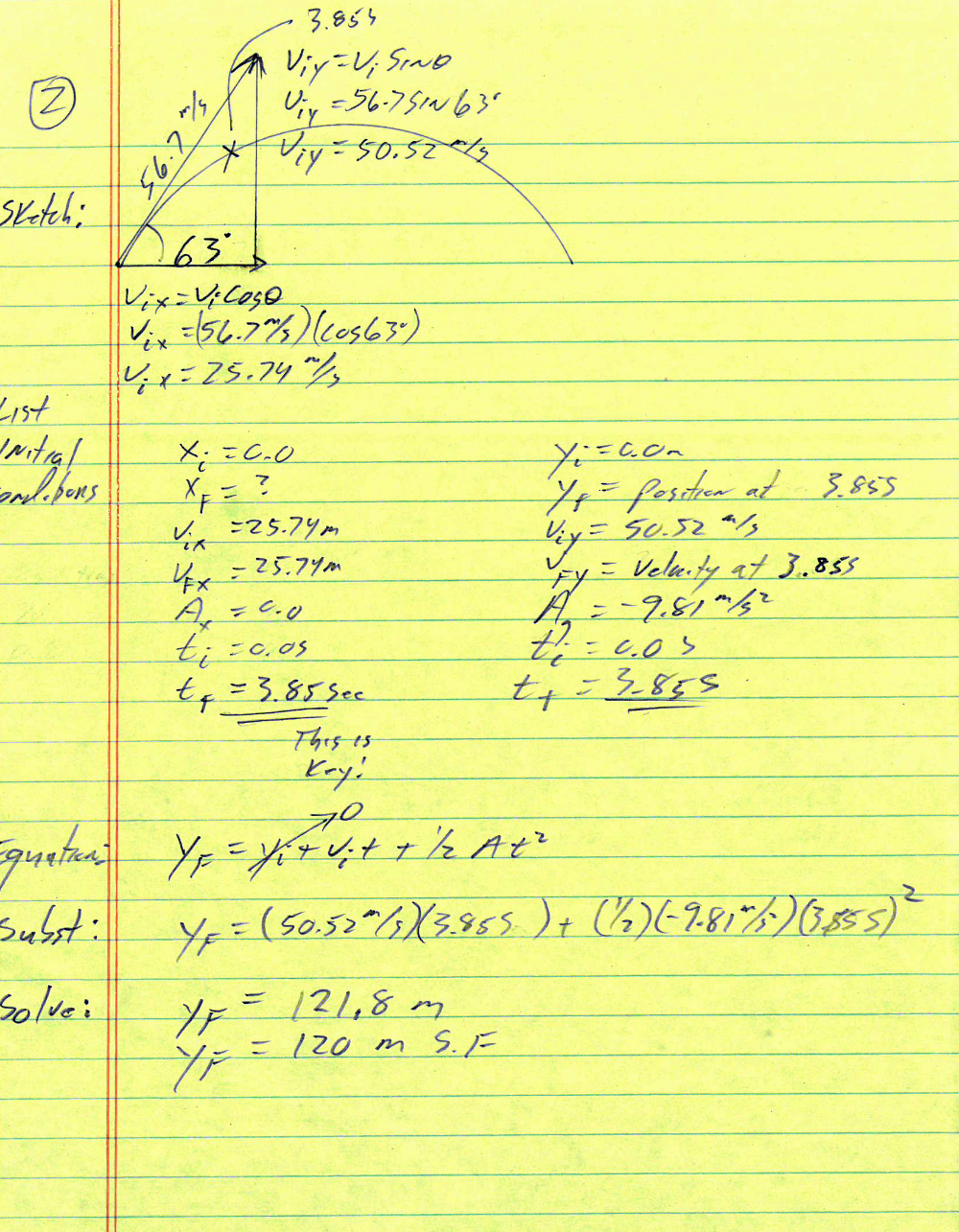
An object is launched from the ground with an initial velocity of 56.7 m/s at an angle of 63 degrees. What height has the object achieved 3.85 seconds after launch?
What is the *hook* for solving this problem?
Solve it!
ANSWER:
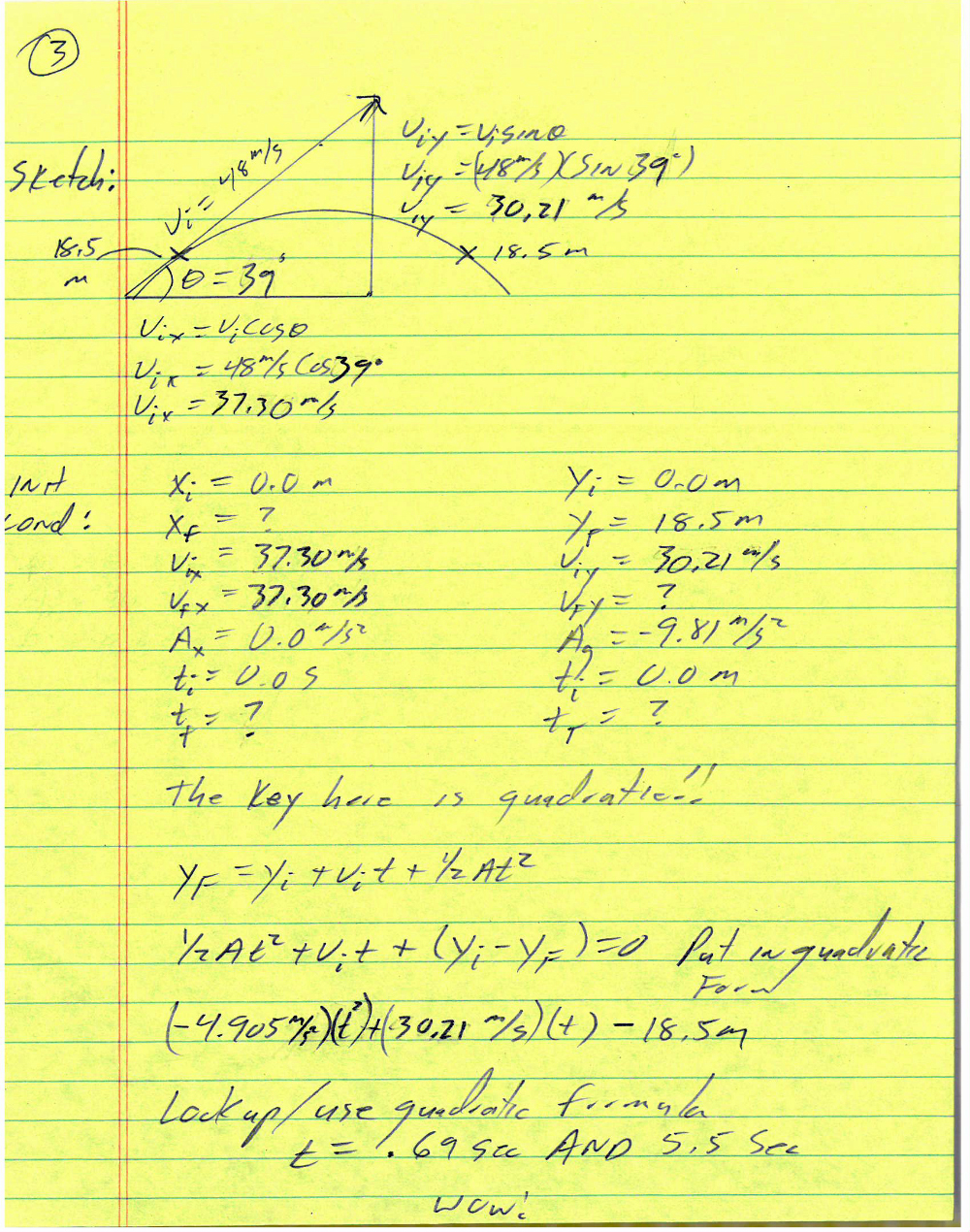
An object is launched from the ground with an initial velocity of 48 m/s at an angle of 39 degrees. At what point in time will its height above the ground be 18.5 m.
Sketch the situation first.
Why are there two answers?
How can we find those?
Try it! (Hint: An online tool will be MOST helpful here)
ANSWER:
First Period helped me come up with this one:
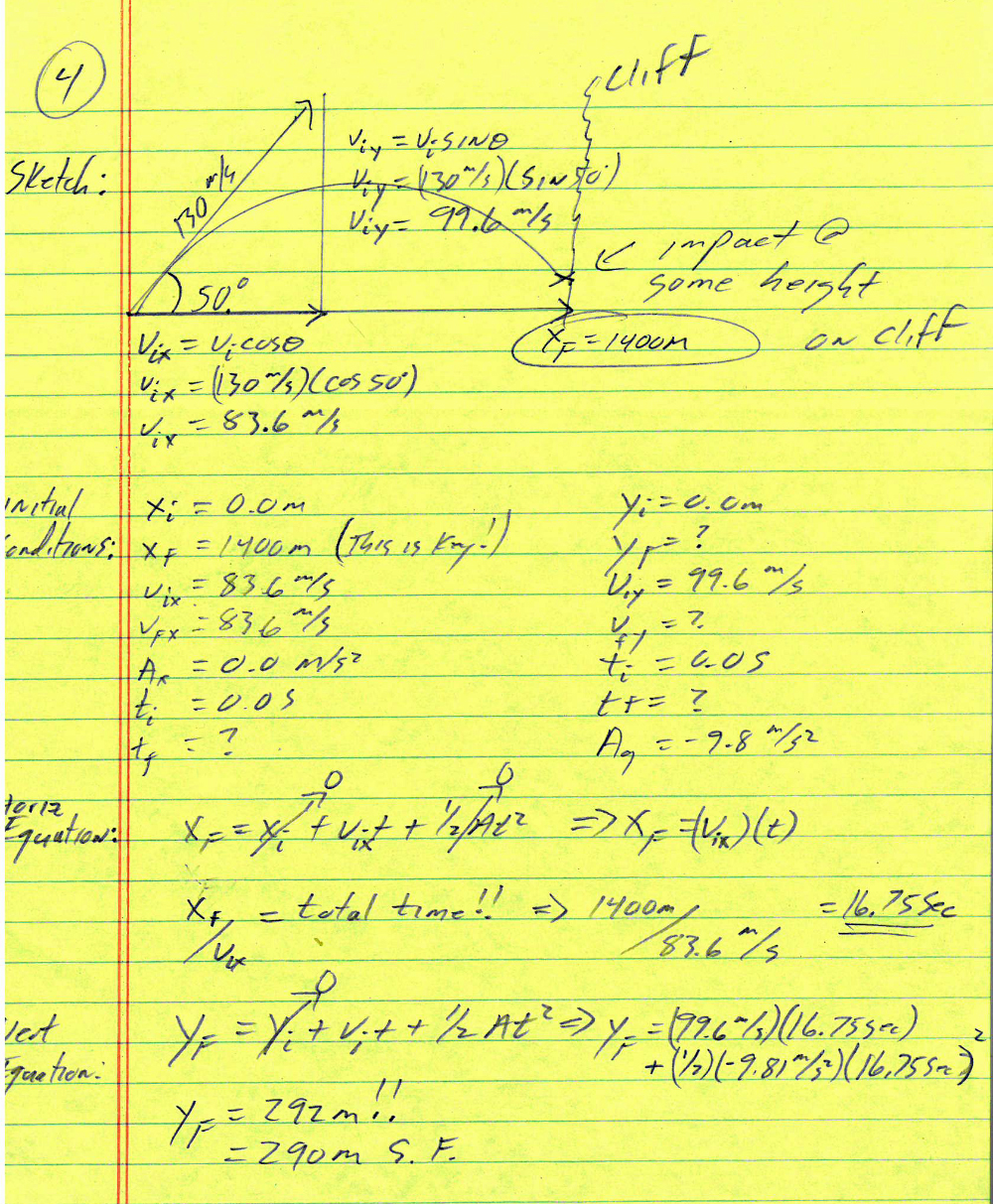
An object is launched from the ground with an initial velocity of 130 m/s at an angle of 50. degrees. A vertical cliff is 1400 meters away.
How high up on the face of that cliff does the projectile land?
Sketch the situation first.
Discuss your approach FIRST before you throw equations at it!
There is a *key* to this problem, can you find it?
ANSWER: